Receipts, not promises
How the t‑shirt bar runs when it is actually game day
Three recent event patterns, written the way we would brief a planner: what the setup was, what got pressed, and what we would repeat or change.
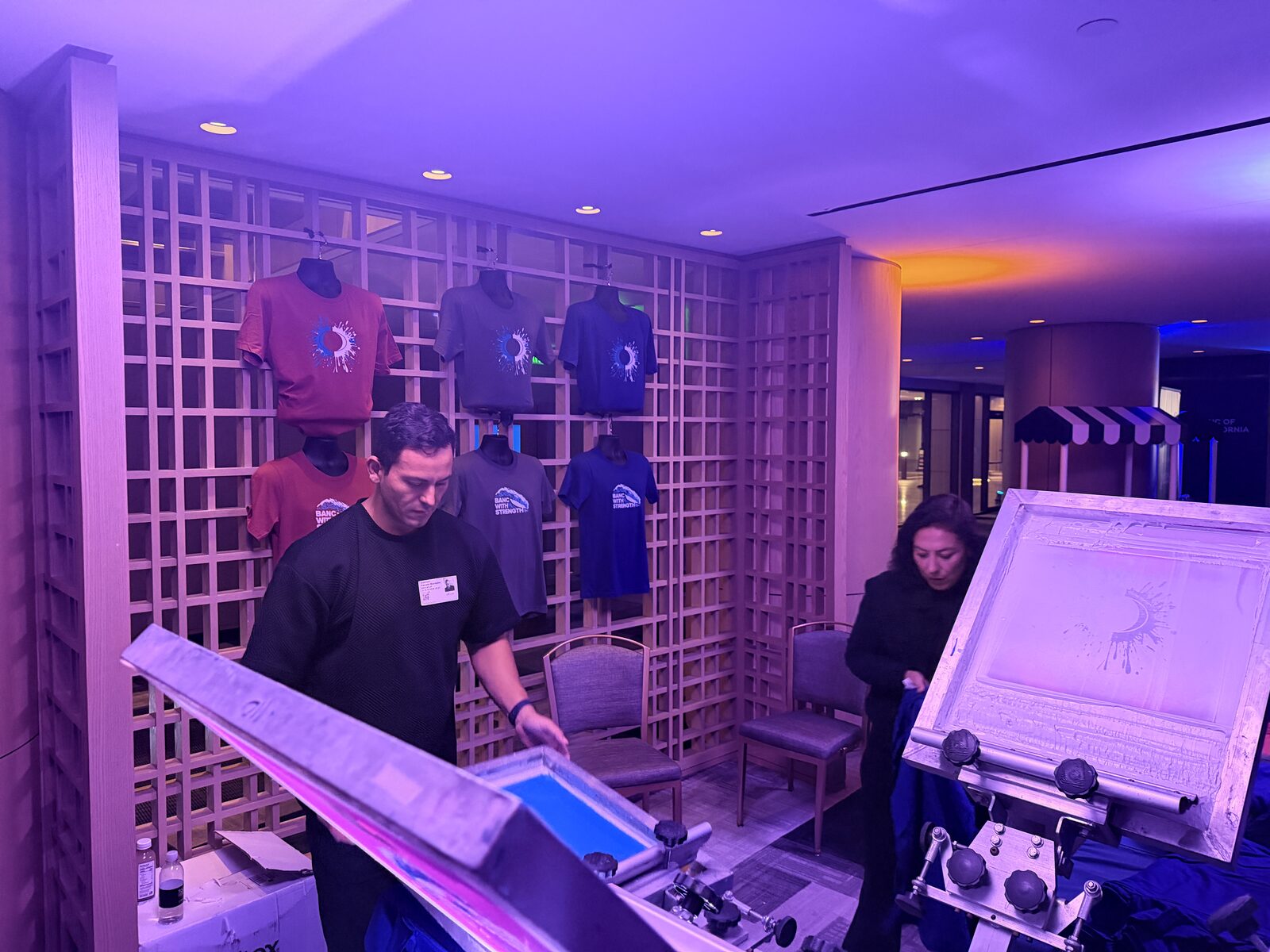
Hotel conference · Southern California
The ballroom bar that outdrew the coffee line
A corporate conference put the bar just off the general-session doors. Four designs hung on the menu — three brand marks and one inside-joke design the organizers almost cut. The joke shirt went first, as it always does.
Setup ran 75 minutes before doors. Across two session breaks and a happy hour, the crew pressed shirts continuously, with the finished-shirt wall doing silent marketing between rushes. The organizer’s note afterward: attendees wore the shirts on day two, which no pre-printed giveaway had ever achieved for them.
Keep: the unofficial design. Change: next time, add a second fold-table staffer for the happy-hour rush.
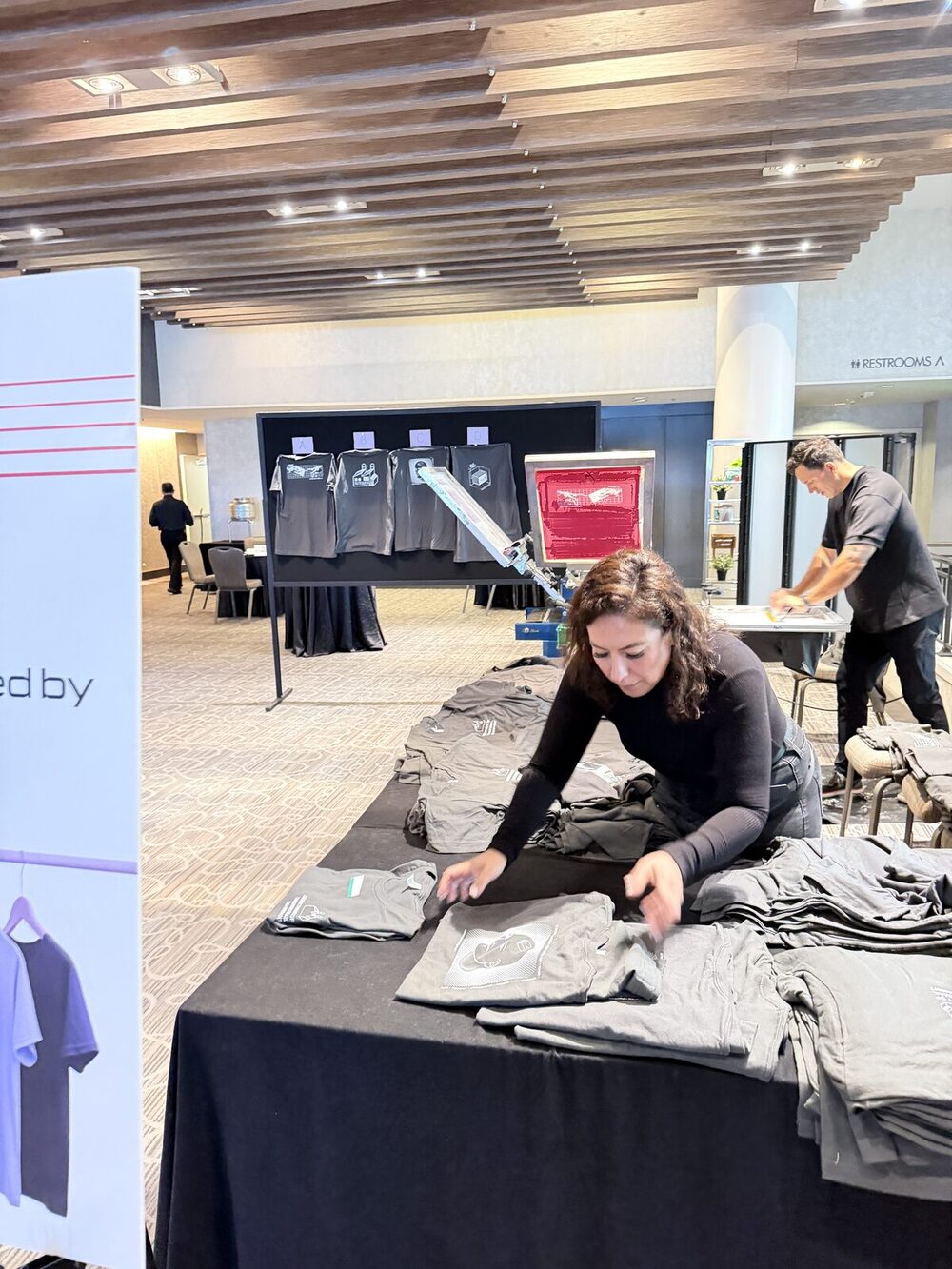
Campus activation · student org fair
Two hundred students, sixty-second attention spans
Campus crowds move fast and decide faster. We trimmed the menu to six designs and posted a “pick a letter, pick a size” sign at the back of the line so students arrived at the front already decided. Throughput held near a shirt a minute for the peak hour.
Size curve mattered more than design count: student events pull heavier on S/M than corporate crowds, and the rack was weighted for it in advance. Zero guests left without their size.
Keep: the decide-in-line signage. Change: nothing — this is the template for campus dates.
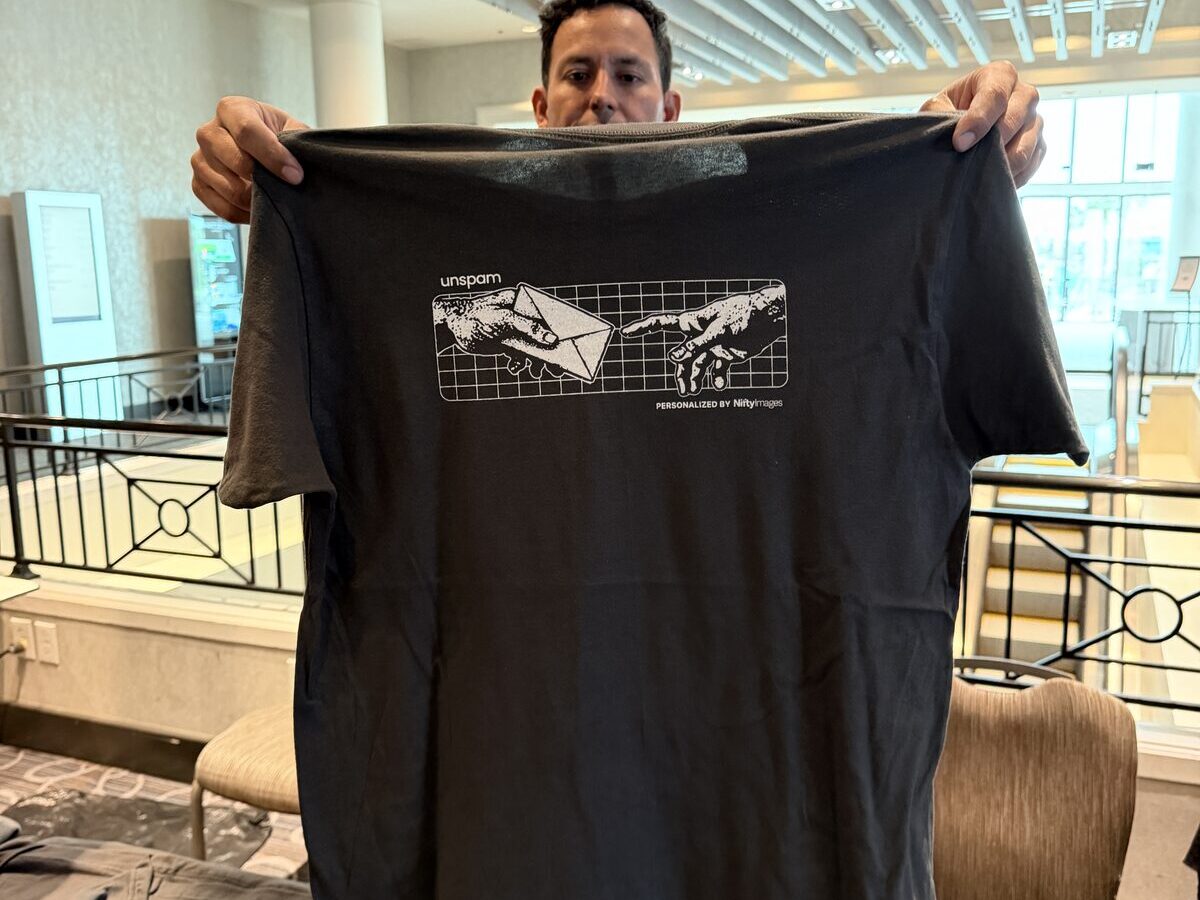
Weekend market run · recurring booth
The market booth that got better every Saturday
A recurring market slot let us treat the menu like a rotating tap list — two designs stayed, two swapped weekly. By week three the returning shoppers were asking what was new, which is the exact behavior a static merch table never generates.
The operational note that surprised the client: mornings sold sizes, afternoons sold designs. Early shoppers bought for family members (size-driven), while afternoon browsers bought for themselves (design-driven). We now stage the rack differently by time of day.
Keep: the rotating menu. Change: arrive with more 2XL after week one’s data.
Planning something that rhymes with one of these? Send the date and we will quote it against the closest pattern we have run.